第二章-应用层
不同的架构
client-server architecture
- servers: always-on host; permanent IP address
- clients: contact with server; maybe offline; may have dynamic address; donot connect with each other directly;
peer-to-peer architecture
- no always-on server
- arbitrary host directly communicate
- peers request and provide service
- peers are intermittently connected and change IP address(complex management)
进程(Process)间交流
同一主机:由操作系统决定
不同主机:exchanging messages(交换报文)
Sockets(套接字)
进程从套接字接收信息/传递信息给套接字
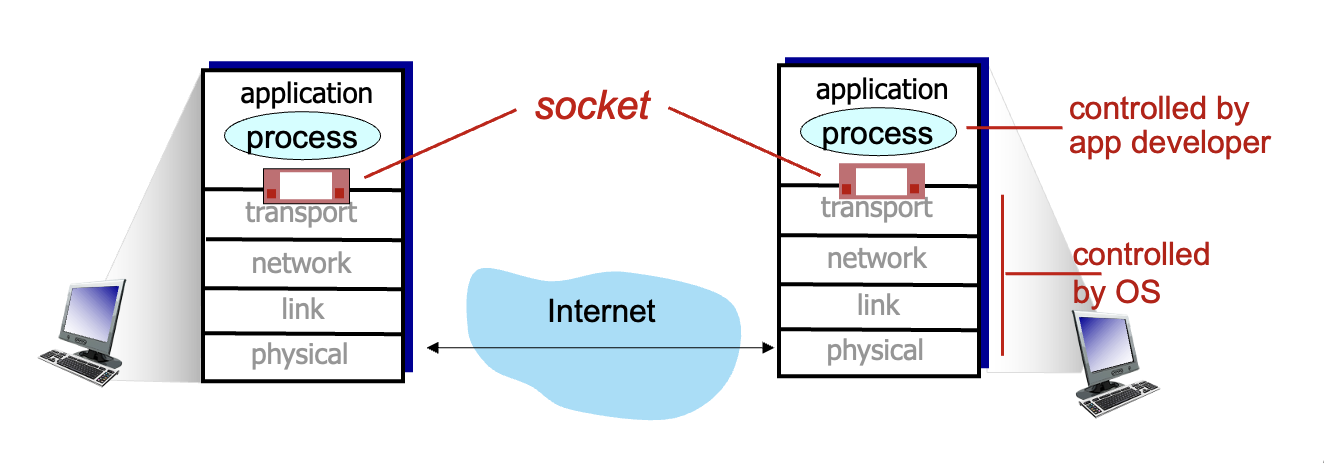
Identifier(辨识符)
identifier includes both IP address and port numbers associated with process on host.
为了给特定的进程通信,目的地需要一个地址(IP address + port)
IP 地址用来标识主机,通过端口来区分不同的进程
应用层协议
把报文发送进socket就可以实现网络进程间的通信,但如何构造这些报文?含义?进程、报文如何互动?应用层协议!
HTTP 协议
- Web’s application-layer protocol
- client/server model:
- client: browser that requests, receives, (using HTTP protocol) and “displays” Web objects
- server: Web server sends (using HTTP protocol) objects in response to requests
HTTP uses TCP and it is “stateless”
- server maintains no information about past client requests
two types:
- Non-persistent HTTP
- persistent HTTP
RTT (round trip time):time for a small packet to travel from client to server and back
Non-persistent HTTP’s response time:
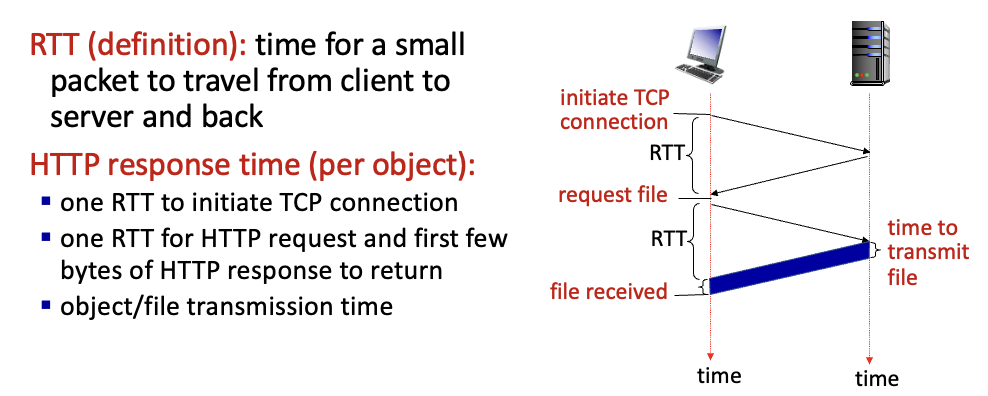
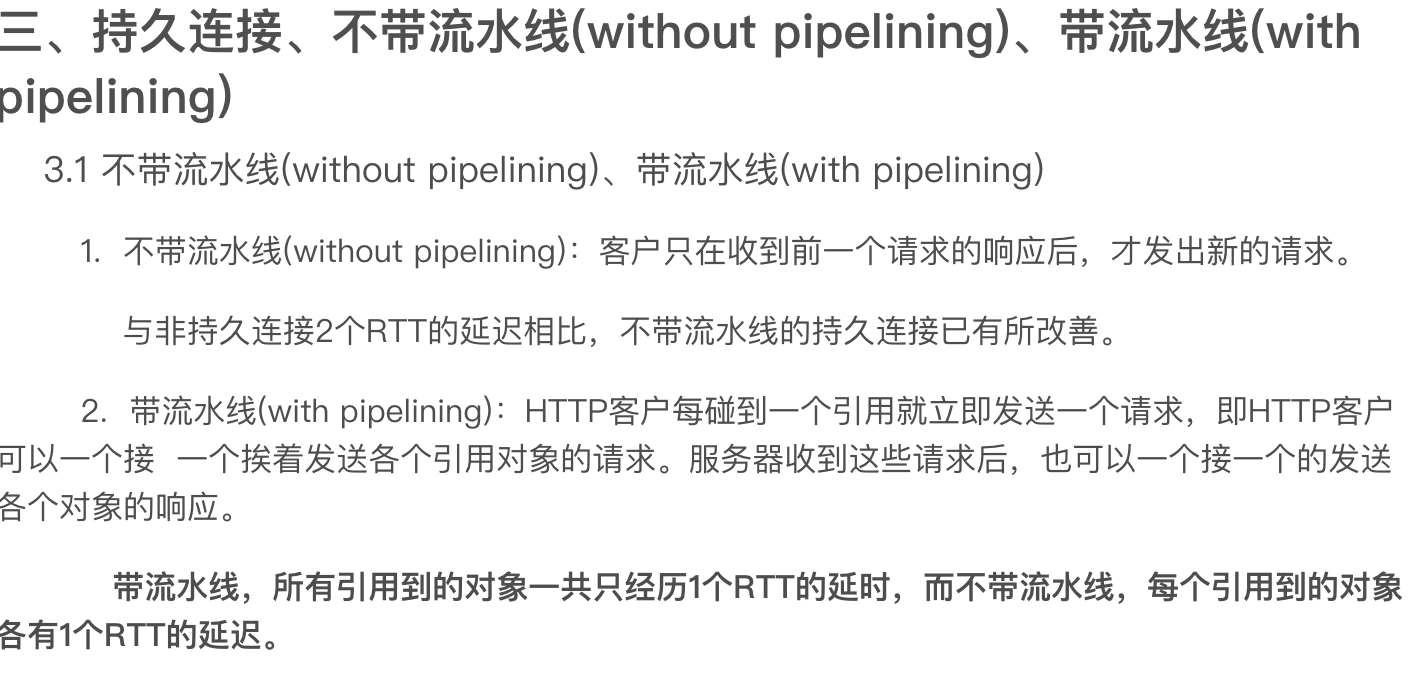
Non-persistent HTTP response time for N files = 2N RTT + N file transmission time(每次都要重发请求)
But for Persistent HTTP resonse time = 2 RTT + N file transmission time(带流水线)
maintaining user/server state: cookies
Web sites and client browser use cookies to maintain some state between transactions
网页缓存:
用户可以配置一个(可以是本地的)网页缓存,这样浏览器会将所有的请求发送给网页缓存,这样网页缓存会在 object in cache 时直接返回,不存在时由 cache 向源服务器发送请求。(代理服务器, proxy server)
Why Web caching?
- reduce response time for client request
- cache is closer to client
- reduce traffic on an institution’s access link
- Internet is dense with caches
- enables “poor” content providers to more effectively deliver content
一些乱七八糟的小点:
conditional get(用于检查 cache 是否 up-to-date)
HOL(head of line) blocking: http2 通过按帧分割传输减轻了这个问题
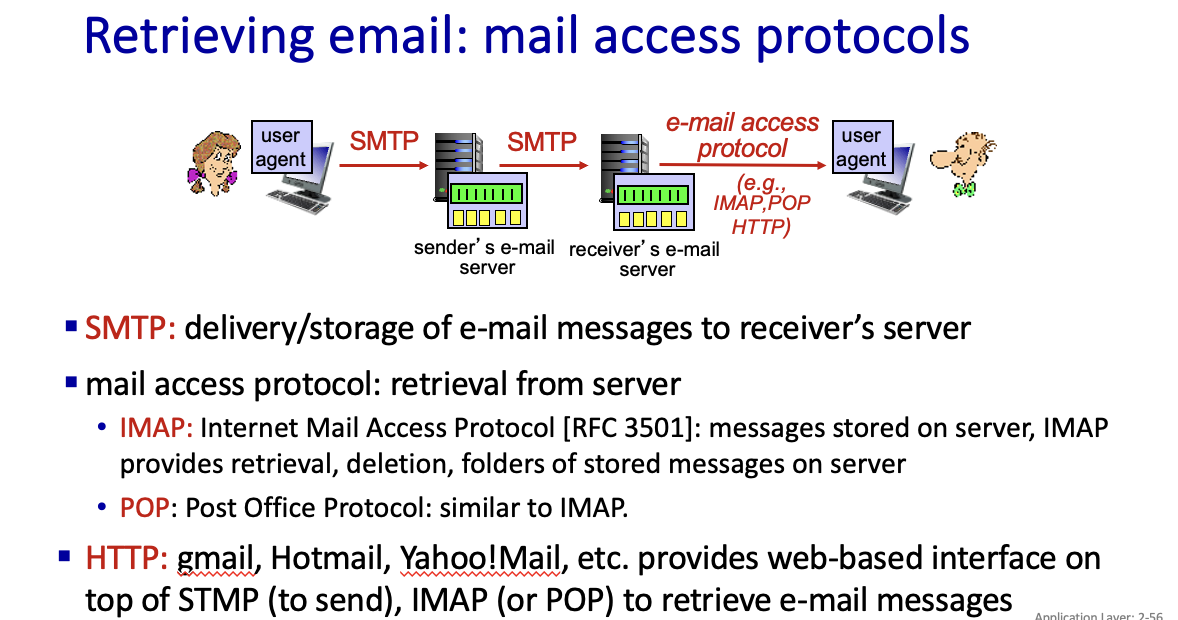
E-mail, SMTP, IMAP
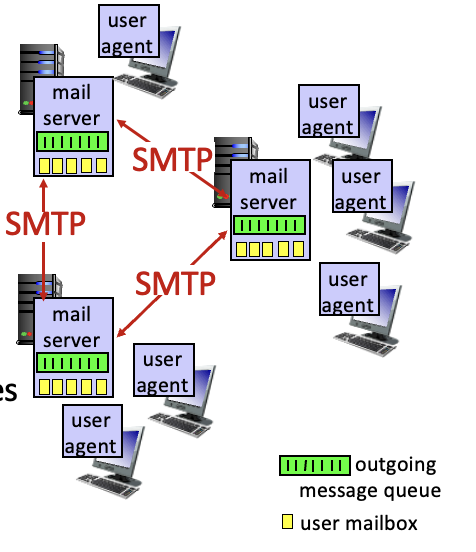
Three major components:
- user agents
- mail servers
- simple mail transfer protocol: SMTP
User Agent
- a.k.a. “mail reader”
- composing, editing, reading mail messages
- e.g., Outlook, iPhone mail client
- outgoing, incoming messages stored on server
mail servers:
- mailbox contains incoming messages for user
- message queue of outgoing (to be sent) mail messages
SMTP protocol between mail servers to send email messages
- client: sending mail server
- “server”: receiving mail server
PPT 第 52 张有一个 smtp(simple mail transfer protocol)+tcp 传输邮件的实例
smtp:push; imap/pop: pull
The Domain Name System(DNS)
- hostname-to-IP_address translation
- canonical, alias names
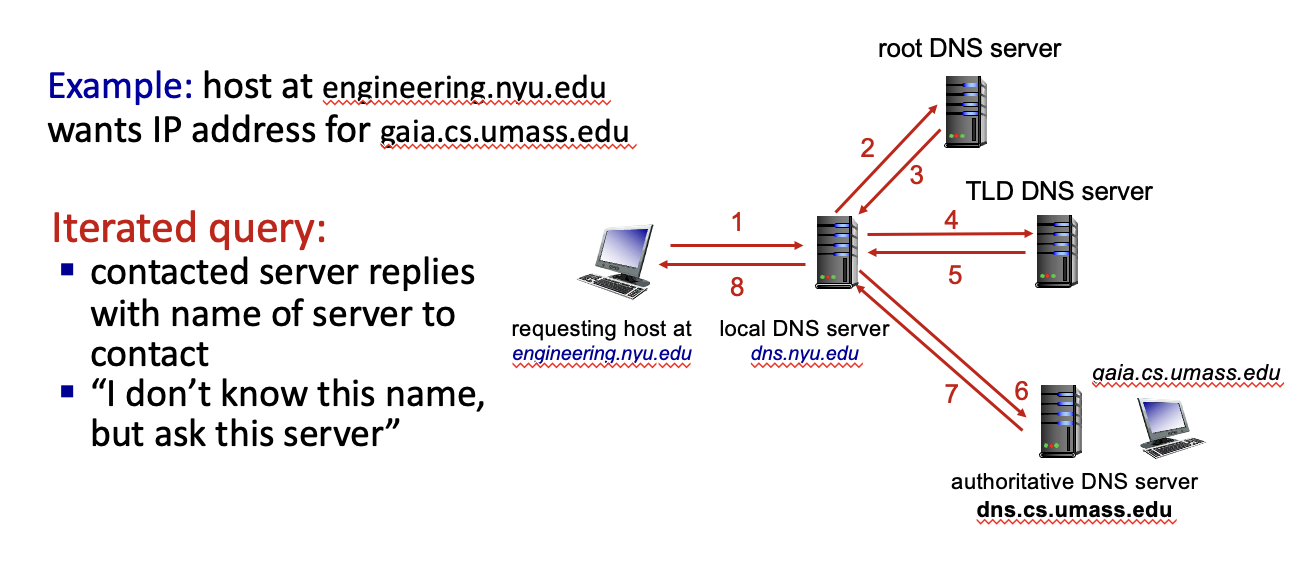
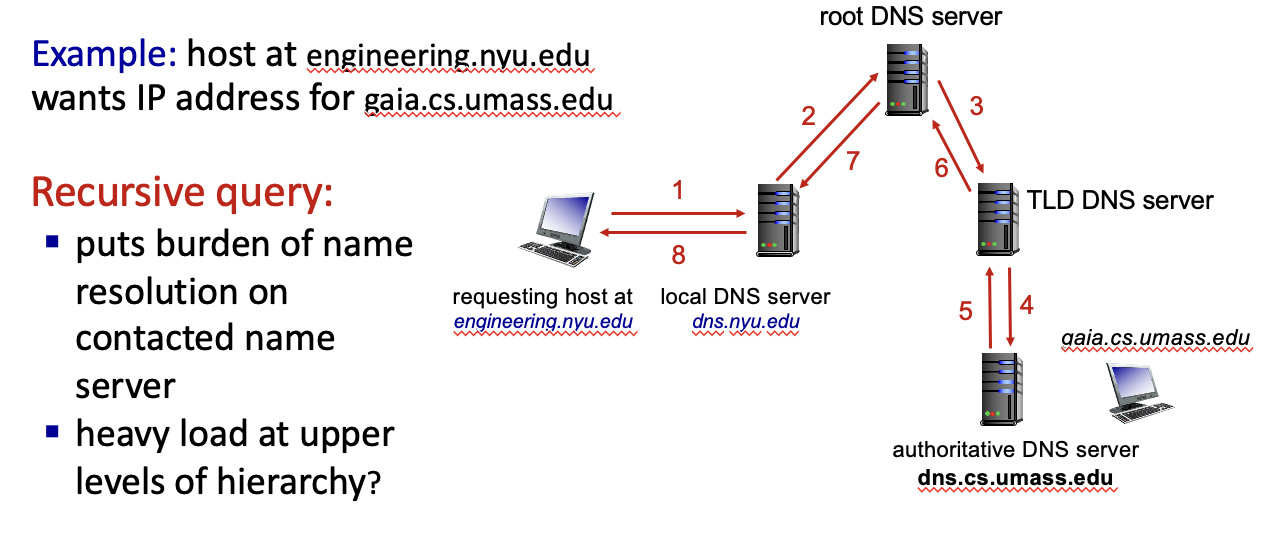
root dns servers - top-level domain(tld) dns servers - authoritative dns servers - local dns name servers
DNS name resolution:
- iterated query(迭代查询)
- recursive query(递归查询)
DNS records:
DNS: distributed database storing resource records (RR)
RR format: (name, value, type, ttl)
p2p applications
file distribution: client-server v.s. p2p (可能会有计算题)
video streaming and content distribution networks
上面这个内容没听到,要补(现在看来好像不是很重要)